AI for Solar and Renewable Operations: Where It Pays Off in 2026
Renewable fleets are growing faster than O&M teams. Here are the AI use cases that actually reduce downtime and truck rolls, and the data foundation they need.
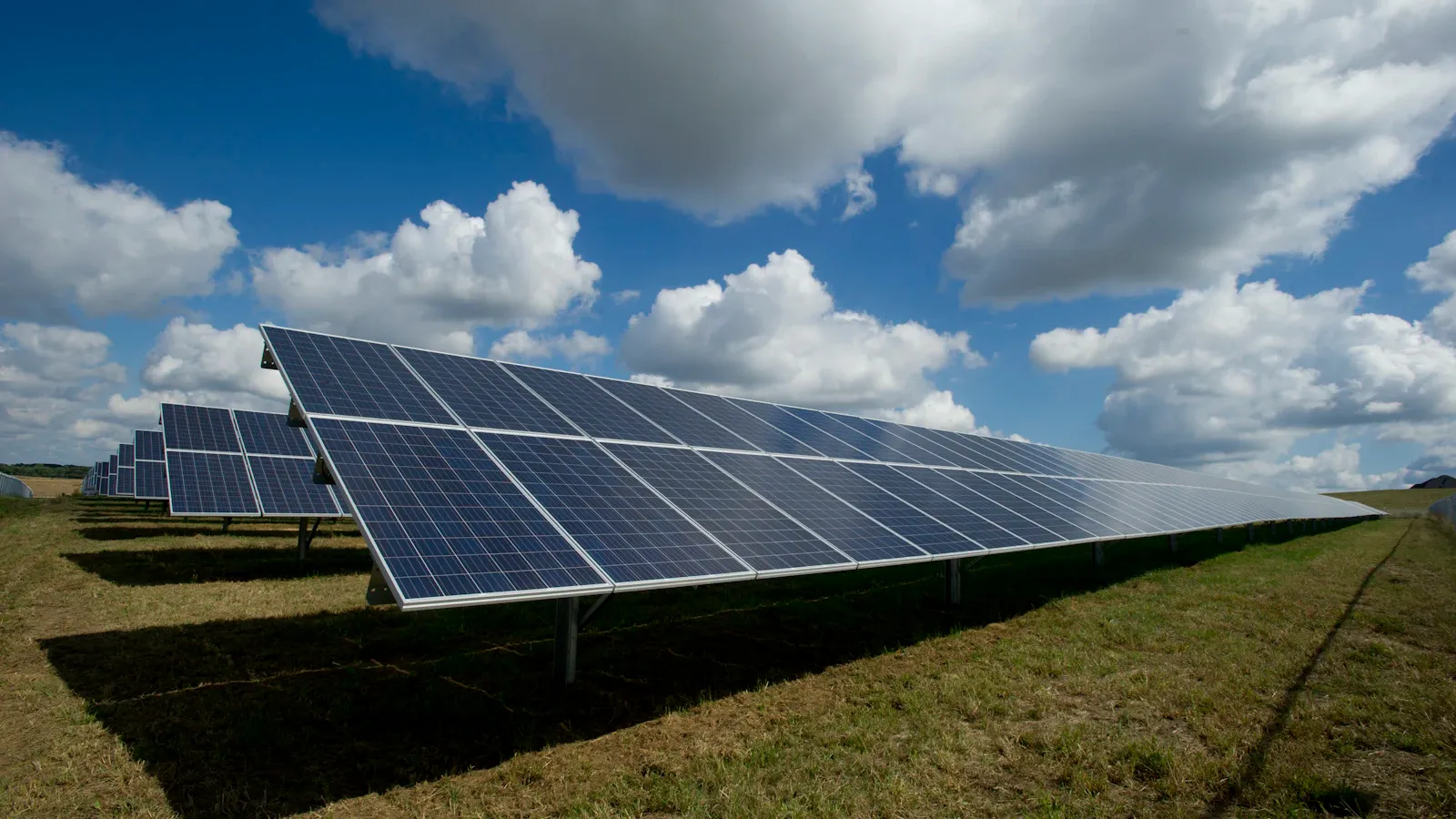
Renewable portfolios are growing faster than the teams that run them. AI is how operators keep availability high without doubling their field crews. But in energy, the model is the last thing you need. The data foundation is the first.
By Waseem Ahmad, Sofyrus Technologies · Published September 16, 2026 · Updated November 6, 2026
Quick answer
AI pays off in solar and renewable operations and maintenance through five use cases: underperformance detection, soiling and cleaning optimization, image-based inspection, predictive maintenance for inverters and trackers, and work-order triage. Unifying SCADA, alarm, maintenance and weather data comes first. Models come second. Operators who reverse that order spend a year building dashboards nobody trusts.
Key takeaways
- 76% of power and renewables executives plan to increase AI spending (Deloitte 2026 Renewable Energy Industry Outlook).
- Saudi Arabia targets around 50% of electricity from renewables by 2030, meaning thousands of megawatts to operate in harsh desert conditions.
- Start with performance dashboards and underperformance alerts. They deliver the fastest payback and produce the clean data later models need.
- Predictive maintenance needs labeled failure history. Most operators do not have enough yet, and that is fine.
The operating problem, from first principles
A solar plant makes money one way: converting sunlight into delivered megawatt-hours. Every loss has a cause you can name:
- Availability losses: inverters, trackers or strings that are down
- Performance losses: soiling, degradation, shading, mismatch, clipping
- Response losses: the time between a fault happening and a technician fixing it
AI does not create energy. It shortens the time between a loss starting and someone acting on it, and it helps you spend scarce field hours on the losses worth the most money. Judge every AI proposal on that basis.
Why now
Deloitte's 2026 outlook found three quarters of power and renewables executives plan to increase AI spending. In the US, solar and storage continue to make up most new generating capacity, and each technician covers more sites every year. In Saudi Arabia, the renewables program targets around half of electricity from renewables by 2030. Large desert plants bring their own physics: intense dust, extreme heat and long distances between sites.
In both markets the constraint is the same: too much data and too few people to act on it. A medium-sized portfolio produces millions of data points a day. No team reads that manually.
Five AI use cases that deliver ROI
1. Underperformance and anomaly detection
Compare each inverter and string against what it should produce given irradiance, temperature and its own history. Flag deviations automatically instead of waiting for a monthly report. This is the simplest use case, often the fastest payback, and the foundation for everything else.
2. Soiling and cleaning optimization
Dust is a major loss driver in the Gulf. Cleaning on a fixed calendar either wastes water and labor or leaves energy on the table. Models that estimate soiling loss per block can trigger cleaning when lost revenue exceeds cleaning cost. In desert plants this is often the highest-value use case of all.
3. Image-based inspection
Drone and thermal imagery analyzed by computer vision finds hot spots, cracked modules, failed bypass diodes and vegetation issues across large sites in hours rather than weeks of walking rows. The output should flow straight into work orders, not into a PDF nobody opens.
4. Predictive maintenance for inverters and trackers
Inverters and trackers usually fail with warning signs in temperature, current, alarm frequency and tracking error. Predicting failures lets you stage parts and crews before a fault takes a block offline. This is the use case everyone wants first, and the one that needs the most history to work.
5. Work-order triage
Plants generate floods of alarms, many of them duplicates or symptoms of one root cause. AI can group alarms into incidents, rank them by revenue at risk, and create work orders with the right context, so technicians fix what matters first.
| Use case | Data needed | Time to value | Typical payback driver |
|---|---|---|---|
| Underperformance detection | SCADA, irradiance, temperature | Weeks | Faster fault response |
| Soiling optimization | Performance data, weather, cleaning logs | 2–4 months | Fewer wasted cleanings, recovered energy |
| Image inspection | Drone or thermal imagery | 1–3 months | Module-level faults found earlier |
| Predictive maintenance | Years of labeled failures | 6–12+ months | Avoided unplanned downtime |
| Work-order triage | Alarms, maintenance history | 1–3 months | Technician time on highest-value faults |
The data foundation comes first
Most energy AI projects stall on data, not models. Before buying any AI product:
- Unify monitoring data from different SCADA and inverter vendors into one model with consistent tags. Mixed fleets often have three or four data formats.
- Clean alarm and maintenance history so models can learn what a real fault looked like and how it was fixed.
- Add weather and irradiance data at the right time resolution.
- Define the asset hierarchy (site, block, inverter, combiner, string) so every alert lands in the right place.
- Agree on a single definition of availability and performance ratio across the portfolio. You would be surprised how often sites calculate them differently.
This integration work is where custom software usually earns its keep, because no single vendor tool covers every asset in a mixed fleet.
Build, buy or combine?
Buy a commercial monitoring or asset performance platform if your fleet is fairly uniform and the vendor supports your equipment. Build or extend when you run mixed fleets, need integration with your own ERP and maintenance systems, or want models tuned to your specific conditions, such as desert soiling. Many operators combine: a commercial platform for standard monitoring, custom data pipelines and models for the high-value problems specific to them.
A practical roadmap
- Months 1–2: unify data for one or two representative sites and build a trusted performance dashboard.
- Months 3–4: add underperformance alerts and work-order triage, and measure fault response time.
- Months 5–8: soiling optimization and image-based inspection.
- Later: predictive maintenance models, once you have enough labeled failures to train and validate them.
Expand site by site only after the first sites prove the numbers.
Oil and gas: the same playbook
The same pattern applies to upstream and midstream assets: unify sensor and maintenance data, start with anomaly alerts, then move to prediction. Many Saudi energy companies run both renewable and hydrocarbon assets, and a shared data platform can serve both, with one asset model and one alerting workflow.
What a good alert looks like
An alert is only useful if a technician can act on it without opening three other systems. A good one answers five questions: what is wrong (inverter 14 in block C is producing 18% below expected), since when, how much it is costing per day, what the likely cause is based on similar past faults, and who should go. Alerts that only say "anomaly detected" train teams to ignore them.
We also recommend a weekly review between the analytics owner and the field supervisor. Which alerts led to real fixes? Which were noise? Feeding that back into thresholds and models is what turns a dashboard into an operating system for the plant.
Common mistakes
- Buying predictive maintenance first without the failure history it needs.
- Dashboards without workflow: alerts that do not create work orders get ignored.
- Inconsistent KPI definitions across sites, which makes portfolio comparisons meaningless.
- Ignoring the field team. Technicians who do not trust the alerts will not act on them. Involve them early.
Frequently asked questions
How is AI used in solar operations and maintenance?
The most common uses are anomaly detection on inverter and string data, soiling and degradation analysis, drone or thermal image inspection, predictive maintenance on inverters and trackers, and automated work-order creation and prioritization.
What data do you need for predictive maintenance on a solar plant?
At minimum, SCADA or monitoring data at inverter and string level, weather and irradiance data, alarm logs and maintenance history. Image data from drones or thermal cameras adds a lot for module-level faults.
Is AI worth it for smaller renewable portfolios?
Often yes, if it starts with simple wins like automated underperformance alerts and work-order triage. Heavier models make more sense once you have years of clean data across many sites.
What is the best first AI project for a desert solar plant?
Usually underperformance detection followed quickly by soiling optimization, because dust is one of the largest controllable losses in Gulf conditions.
Can the same platform serve renewables and oil and gas assets?
Yes. A shared data platform with a common asset model and alerting workflow can serve both, which many Saudi energy companies find efficient.
How Sofyrus helps
We build energy software for renewables and oil and gas operators, working with our partner DomainXeed on energy solutions. See our energy and renewables software services. For AI programs that span several business units, see AI transformation services.
Sitting on SCADA data you do not use? Book a call and we will scope a first performance and alerting dashboard.
Sources
- Deloitte Insights, 2026 Renewable Energy Industry Outlook
- Saudi Ministry of Energy, Renewable energy program